My Biology Glossary
My Biology Glossary
Hi, my name is Tristan, and I have been studying Science at Montmorency College for a year. My field of study is Biology. Biology is a class that uses a lot of important and diverse words. To pull off this class students have to know the meaning of a lot of terms. I created this glossary for people who are going to study biology or people that are studying right now. These words are the basic terms you need to know to ace this class. It is really useful to learn the meaning of those words because most of these concepts are studied in depth throughout semesters. By learning the meaning of these words you can get ahead in your study in this field.
- species
- noun
- A group of living organisms consisting of similar individuals capable of exchanging genes or interbreeding.
- Example: In his book he argued "tissues, organs, organisms and even species originated by the establishment of long term symbiogenesis".
- fr: espèce

- growth
- noun
- The process of increasing in physical size.
- Example: The growth and division of mitochondria and chloroplasts are not linked with nuclear division.
- fr: croissance
- gene
- noun
- A unit of heredity which is transferred from a parent to offspring and is held to determine some characteristic of the offspring.
- Example: Ribosomal RNA gene sequencing and phylogeny techniques can be used to show that mitochondria and chloroplasts are highly related ancestors of specific Bacteria.
- fr: gène

- metabolic
- adjective
- Relating to or deriving from the metabolism of a living organism.
- Example: The former provided the central genetic material and nucleic acid metabolism while the latter provided most metabolic characteristics.
- fr: métabolique

- evolution
- noun
- The process by which different kinds of living organisms are thought to have developed and diversified from earlier forms during the history of the earth.
- Example: Darwin's theory of evolution is based upon the idea of natural selection.
- fr: évolution
- DNA
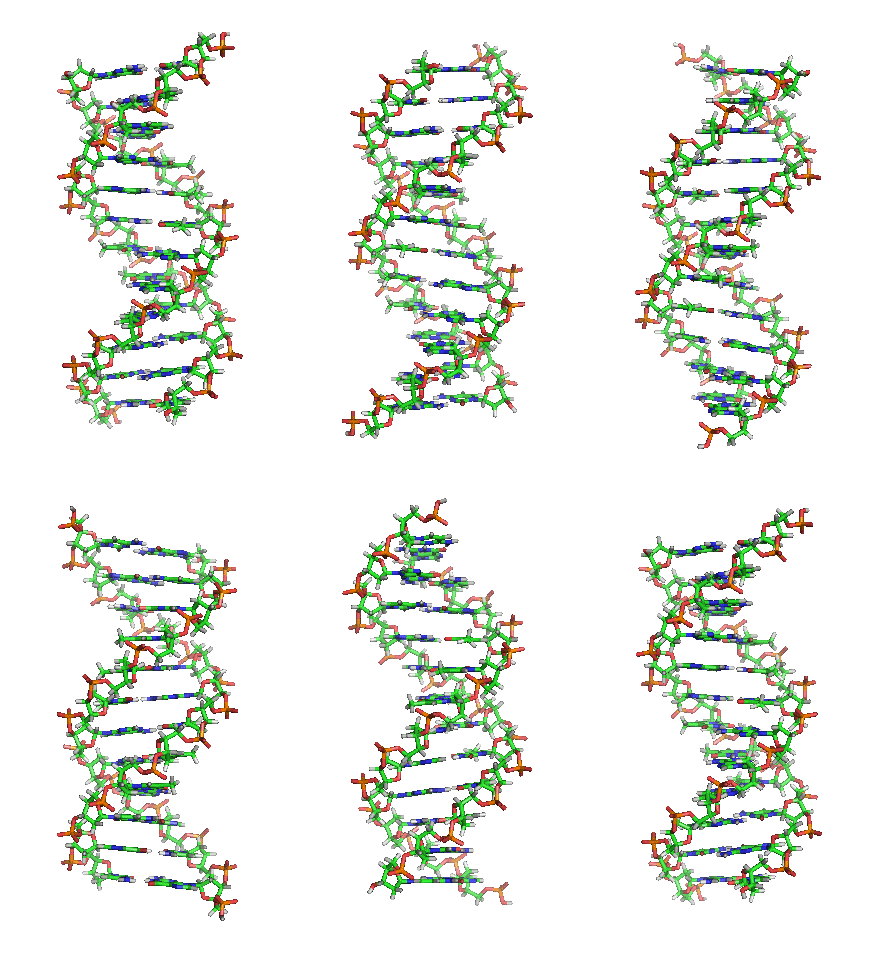
- noun
- Deoxyribonucleic acid, a self-replicating material which is present in nearly all living organisms as the main constituent of chromosomes. It is the carrier of genetic information.
- Example: Evidence for the theory is relatively strong, particularly the finding that mitochondria and chloroplasts have circular dna similar in form to that of bacterial dna, and that they contain prokaryotic type ribosomes.
- fr: ADN
- pathway
- noun
- A sequence of chemical reactions undergone by a compound or class of compounds in a living organism.
- Example: In most tissues, the selective activation of these cell-cycle pathways is readily discernable.
- fr: voie
- culture
- noun
- The cultivation of bacteria, tissue cells, etc. in an artificial medium containing nutrients.
- Example: Some of the amoeba however did survive and appeared to now be immune to the bacteria in their culture.
- fr: culture
- RNA
- noun
- Ribonucleic acid, a nucleic acid present in all living cells. Its principal role is to act as a messenger carrying instructions from DNA for controlling the synthesis of proteins, although in some viruses RNA rather than DNA carries the genetic information.
- Example: Ribosomal rna gene sequencing and phylogeny techniques can be used to show that mitochondria and chloroplasts are highly related ancestors of specific Bacteria.
- fr: ARN

- absorption
- noun
- Assimilating substances into the cell or across the tissues and organs. It is done through diffusion or osmosis.
- Example: Pine bark substrate had similar performance to peat substrate, as far as is it concerns physical characteristics, water and fertilizer absorption and plant development.
- fr: absorption

- active site
- noun
- A region on an enzyme that binds to a protein or other substance during a reaction.
- Example: When O 2 fits in the active site of the RuBP carboxylase, the ribulose bisphosphate doesn't break down evenly into 2x 3-phosphoglcerate molecules but into one (where it will continue with the stages above).
- fr: site actif
- agrobiology
- noun
- The branch of biology that deals with soil science and plant nutrition and its application to crop production.
- Example: Yeo suggested that this is possible only if the latest technology, including agrobiology and biotechnology, is applied to the largely traditional agricultural practices.
- fr: agrobiologie

- apoptosis
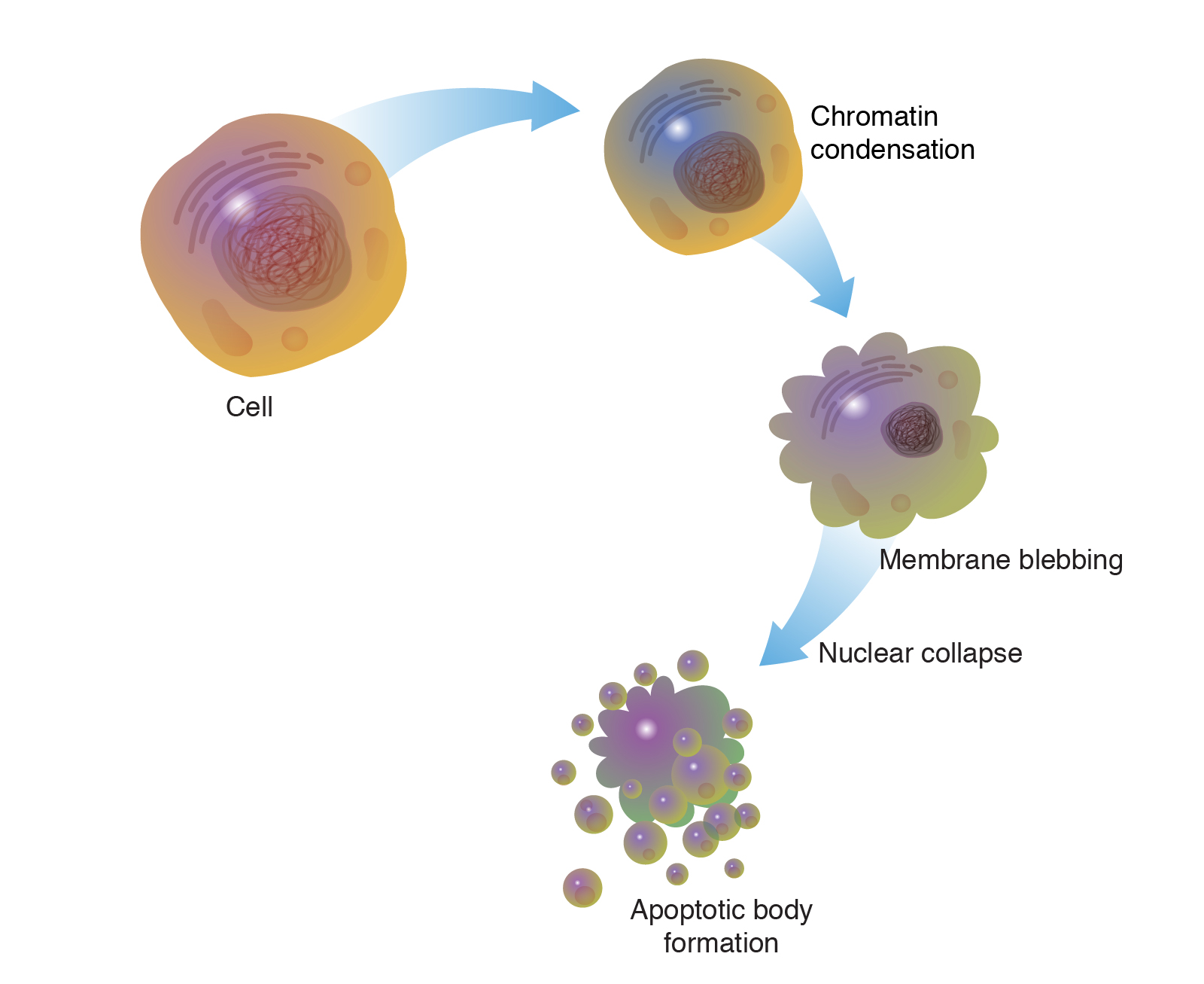
- noun
- The death of cells which occurs as a normal and controlled part of an organism's growth or development.
- Example: After F. tularensis has replicated, apoptosis of the macrophage occurs by lysis of the cell due to the sheer numbers of F. tularensis which then disseminate until another macrophage is found.
- fr: apoptose
- bipedal
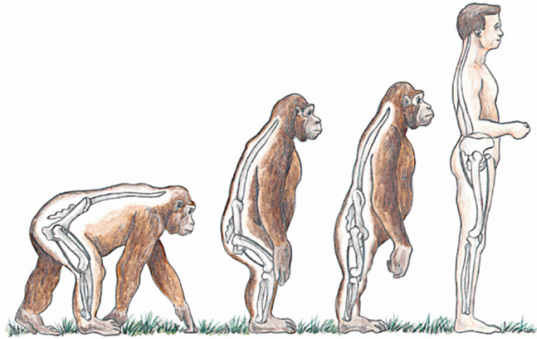
- noun
- (of an animal) using only two legs for walking.
- Example: There is nothing in their vertebrae, joint structures or feet to say that they were anything but a fully upright bipedal species (this definitely detracts from the stooping ape - like beast of the early 20 th century).
- fr: bipède
- biomass
- noun
- Renewable organic materials, such as wood, agricultural crops or wastes, and municipal wastes, especially when used as a source of fuel or energy.
- Example: Following this resurgence of the pest, a balance between the cactus biomass and insect numbers was established.
- fr: biomasse

- carbon fixation
- noun
- The process by which plants assimilate carbon from carbon dioxide in the atmosphere to form metabolically active compounds.
- Example: Some plants have evolved alternative methods of carbon fixation, which work to reduce the amount of photorespiration, by incorporating the CO 2 into organic intermediates before entering the carbon cycle.
- fr: fixation du carbone

- chromosome
- noun
- A threadlike structure of nucleic acids and protein found in the nucleus of most living cells, carrying genetic information in the form of genes.
- Example: Normal eukaryotic cells contain two copies of any one chromosome.
- fr: chromosome
/cdn.vox-cdn.com/assets/3289859/chromosome.png)
- denaturation
- noun
- Process modifying the molecular structure of a protein.
- Example: NMR can also be used to study protein denaturation if the solution is in nonphysiolgical condition, or dynamic features of molecular structures.
- fr: dénaturation

- mitosis
- noun
- A type of cell division that results in two daughter cells each having the same number and kind of chromosomes as the parent nucleus, typical of ordinary tissue growth.
- Example: They are also not split equally between cells when they divide at mitosis and so one cell may inherit all maternal mitochondria.
- fr: mitose

- meiosis
- noun
- A type of cell division that results in four daughter cells each with half the number of chromosomes of the parent cell, as in the production of gametes and plant spores.
- Example: Eukaryotes reproduce sexually by crossing genetic material with another cell in a process called meiosis, this allows for more rapid evolution as each offspring is genetically different to its parents.
- fr: méiose

- dynein
- noun
- An ATPase that is associated especially with microtubules involved in the movement of cellular organelles and structures (such as cilia, flagella, and chromosomes).
- Example: These undulipodia are made up of a cylindrical array of 9 evenly spaced microtubules, with motor molecules of dynein linking the adjacent microtubules together.
- fr: dynéine

- embryo
- noun
- The young of a viviparous animal, especially of a mammal, in the early stages of development within the womb, in humans up to the end of the second month.
- Example: The embryo contains biotin, which cancels out the effect of the avidin.
- fr: embryon

- enzyme
- noun
- Proteins that speeds up the rate of a chemical reaction in a living organism.
- Example: Mitochondria also contain this enzyme which is, again, highly homologous to the bacterial equivalent, however, in mitochondria, it is encoded by nuclear DNA and then must be moved to the mitochondria as previously discussed.
- fr: enzyme

- genetic
- adjective
- Relating to genes or heredity.
- Example: The low DNA content of mitochondria and chloroplasts is accounted for in the theory, by assuming a substantial loss and transfer to the nucleus of genetic information.
- fr: génétique

- heredity
- noun
- The passing on of physical or mental characteristics genetically from one generation to another.
- Example: Dawkins argues that the fundamental unit of selection, and therefore of self-interest, is not the species, nor the group, nor even, strictly the individual. It is the gene, the unit of heredity.
- fr: hérédité
